

What just happened with interest rates?
The Reserve Bank of Australia (RBA) has lifted the cash rate by 0.25%, taking it to 4.85%. The result being the highest interest rates target since December 2008.
The decision was made on the back of recently released inflation data indicating inflation not only remains higher than the Board’s target band of 2% to 3% but it has increased in the year to September to 4.3%. As recently as July, annual inflation was measured at 3.5%.
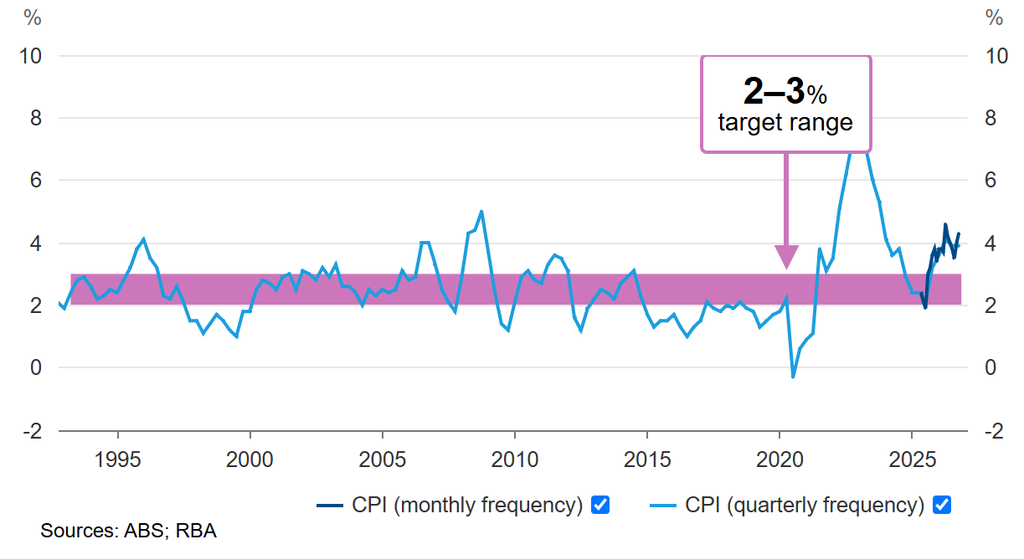
With inflation higher than target and still on the rise, despite an earlier 4 interest rate increases this calendar year, it is proving harder to bring down than expected. Prices are rising across many parts of the economy — not just fuel and energy, but also technology, goods and everyday services. Businesses are facing higher costs and many are passing these on to consumers. Because of this, the RBA now expects inflation to stay above its 2% to 3% target until late 2027, which is much later than previously thought.
Higher interest rates this year have already slowed the economy. House prices have fallen, unemployment has edged up, and households are spending less. The RBA expects growth to remain weak for a while, which should eventually help ease inflation. However, global uncertainty — especially the conflict in the Middle East, rising oil prices and AI-related investment — continues to pose risks.
Given the updated inflation outlook, most RBA board members agreed another rate rise was needed. Six members voted for the increase, while three preferred to keep rates on hold. The RBA says it will keep watching the data closely and will do whatever is necessary to bring inflation back under control.
What does that mean for me?
Industry experts have crunched the numbers:
Anja Pannek – CEO of the Mortgage and Finance Association of Australia (MFAA) – says “The increase could add approximately $119 a month to repayments on a $731,000 mortgage, equivalent to the national average new owner occupier loan. Every household will experience this decision differently. A positive step borrowers can take today is to understand what it means for their repayments, their budget and their plans. A mortgage broker can review your current loan, compare alternatives and explain the costs, features and lending requirements that matter to your circumstances.”.
And David ‘Kochie’ Koch – Economic Director at Compare the Market – encourages borrowers to consider the broader impacts of a rate rise. Koch says “We tend to think of mortgage pain in terms of our monthly repayments. But let’s zoom out and look at what an extra 0.25% means over the life of a 30-year loan. If you’re on a rate of 6.5%, you could end up spending $43,029 more on interest than you would on a rate of 6.25%. And that’s for an average-sized loan.”
What can I do about it?
You don’t need to work through rate rises alone. A mortgage broker can help review your current lending against your goals and personal circumstances in order to assess potential options, switching costs and available savings presented by refinancing.
Reach out to Tweed Coast Home Loans to review your options today.

